
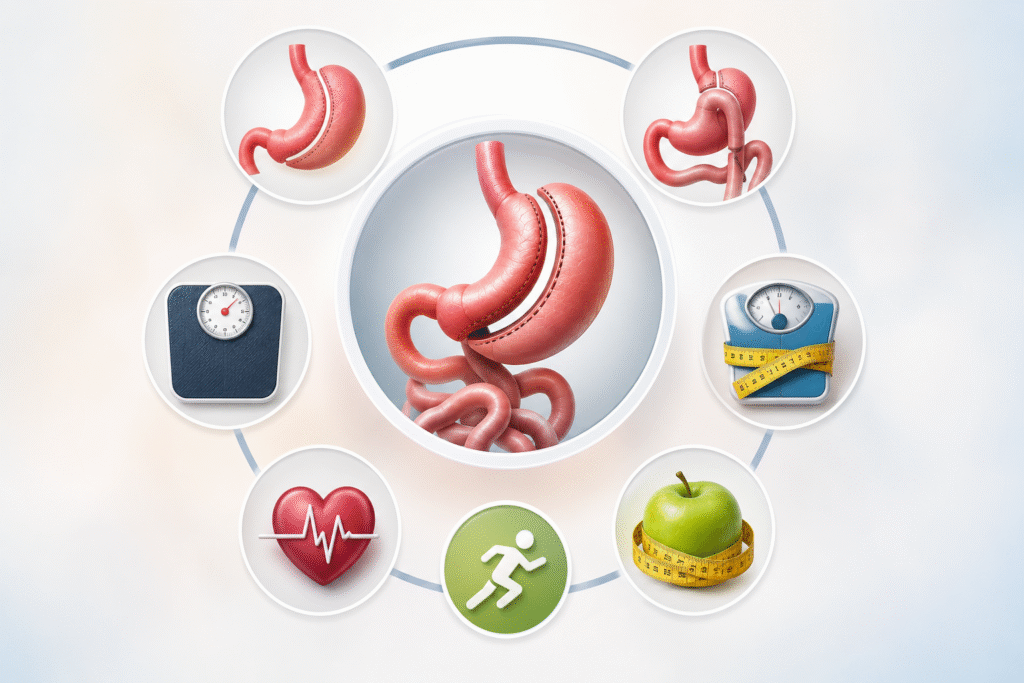
More than one in five adults in Pakistan is now classified as overweight and that number hasn’t stopped climbing. In Islamabad alone, thousands of people have cycled through diets, plans, and programmes that worked for a while or didn’t work at all and eventually ended up right back where they started. Some have tried it more than once. Same result.
If that sounds familiar, there’s something worth understanding before you write it off as a personal failure: it usually isn’t a discipline problem. The biology of weight regulation is genuinely complicated, and for some people, no amount of calorie counting touches the underlying mechanism driving it. That’s not an excuse it’s physiology. Weight loss surgery in Islamabad has, for many patients, been the only intervention that actually shifted that mechanism in a lasting way.
Why Bariatric Surgery in Islamabad Has Changed So Much in the Last Decade
Not long ago, anyone seriously considering bariatric surgery in Pakistan was looking at travelling abroad to Bangkok, Dubai, or further. That picture looks completely different now. Trained specialists, internationally accredited hospitals, structured pre- and post-operative care, and outcomes that hold up against major global centres the field has matured considerably, and Islamabad sits at the centre of that growth.
Demand has risen as awareness has, and the infrastructure has followed. Patients no longer need to leave the country to access care that meets international surgical standards. Having your surgeon, your nutritionist, and your follow-up care all in the same city makes a real difference to how recovery actually goes.
Who Is Dr. Ahmad Raza?
The procedure matters. The surgeon matters more.
Dr. Ahmad Raza is a fellowship-trained bariatric and laparoscopic surgeon based in Islamabad, with a clinical focus on metabolic surgery and long-term weight management. His qualifications include FCPS certification, MRCS Edinburgh, and international surgical training in minimally invasive laparoscopic techniques. He operates at accredited hospital facilities across the twin cities including Medicsi and affiliated sites where patients from DHA, Bahria Town, G-8, F-8, and surrounding areas typically come in.
Credentials are the starting point, not the whole story. What’s harder to quantify on a CV but matters enormously to actual outcomes is what happens around the surgery. Every patient goes through a detailed pre-operative evaluation, psychological assessment, and nutritional counselling before a procedure date is even discussed. After the procedure, the follow-up is structured and ongoing not a discharge note and a phone number.
That continuity makes a genuine difference to long-term results. If you’ve been searching for a weight loss clinic Islamabad that combines real surgical expertise with proper aftercare, that combination is rarer than most clinic websites suggest.
What Weight Loss Surgery Procedures Are Available?
Not every patient needs the same surgery. The right choice depends on BMI, existing health conditions, surgical history, and what you’re trying to achieve. Dr. Ahmad Raza performs the full range of modern bariatric procedures, all carried out laparoscopically.
Sleeve Gastrectomy (Gastric Sleeve)
The most commonly performed bariatric procedure in Pakistan right now. Roughly 80% of the stomach is removed, leaving a narrow sleeve. One of the more significant effects is a substantial drop in ghrelin the hunger hormone which is why patients report feeling full on amounts of food that would have barely registered before surgery.
It’s irreversible, technically less complex than bypass, and for most patients delivers excess weight loss between 50 and 70% over the first eighteen months.
Gastric Bypass (Roux-en-Y)
Generally considered the gold standard for patients with severe obesity or type 2 diabetes that hasn’t responded to other management. A small stomach pouch is connected directly to the small intestine, bypassing most of the stomach and part of the intestinal tract. The result is both restriction and reduced calorie absorption.
Diabetes resolution rates are striking over 80% of patients showing remission within a year in some studies, often before significant weight loss has even occurred.
Mini Gastric Bypass
A simplified version of the traditional bypass with shorter operating time and comparable results for the right candidate. Increasingly discussed for patients who want bypass-level outcomes without the full complexity of Roux-en-Y. Whether it suits your situation is exactly what the consultation is for.
One thing worth saying directly: whatever procedure sounds most appealing after reading an article isn’t necessarily right for you. BMI, reflux history, previous abdominal surgeries, how your diabetes is currently behaving all of it shapes which option actually delivers. Don’t arrive at a consultation having already decided. Arrive with questions.
Am I a Candidate for Weight loss surgery in Islamabad?
Beyond the Numbers
Bariatric surgery works best for people who understand it isn’t a standalone fix. It removes real obstacles that were blocking progress. What you do with those new conditions over the months and years that follow determines where you actually land. Patients who go in clear-eyed about that tend to end up somewhere very different from those who don’t.
What Most Clinics Don’t Tell You About Bariatric Surgery in Pakistan
The success statistics are easy to find. Here’s what comes up less often.
The First Few Weeks Are Harder Than Expected
The first few weeks after weight loss surgery in Islamabad are harder than most people expect. Liquid diet, a body that’s recalibrating, and a disorienting shift in how you experience hunger that combination catches people off guard even when they’ve done their research. It’s completely normal. It’s also exactly why post-operative support isn’t optional. At Dr. Ahmad Raza’s clinic, nutritional follow-up and psychological check-ins are built into the care plan from day one.
Hair Thinning Is Common and Temporary
Hair thinning between three and six months post-surgery is extremely common. It’s linked to the rapid weight loss phase and temporary but almost nobody prepares patients for it, and it’s alarming without context. Protein intake and micronutrient supplementation help. Your bariatric nutritionist will map that out before discharge.
Your Relationship with Food Changes Permanently
Certain foods that were ordinary before may not sit well anymore. Bypass patients in particular need to understand dumping syndrome the body’s response to sugary or high-fat foods moving too quickly through the digestive tract. In practice it sounds worse than it is, and many patients find it reinforces healthier habits more reliably than willpower ever did.
The patients who struggle most long-term are typically those who arrived without proper nutritional education beforehand. Choosing the best clinic in Islamabad with a structured pre-surgery education programme makes a measurable difference to this.
Taking the First Step Toward Weight loss surgery in Islamabad
Weight loss surgery in Islamabad has given thousands of patients more than a lower number on a scale resolved diabetes, better sleep, less joint pain, energy that had been missing for years. Dr. Ahmad Raza’s practice brings the surgical credentials and the structured care that this kind of intervention genuinely demands.
If you’ve been sitting on this decision, the consultation costs nothing but time. Come with every question you have and make the call with real information in front of you.
Book Your Consultation with Dr. Ahmad Raza Today
Frequently Asked Questions
Q: Is weight loss surgery in Islamabad safe?
Yes when performed by a fellowship-trained surgeon in an accredited facility. Laparoscopic techniques have brought complication rates down significantly over the past decade. Serious adverse events are uncommon in experienced hands, though the pre-operative evaluation exists precisely to identify patients where the risk picture looks different.
Q: How long does recovery take after bariatric surgery?
Most patients return to light activity within two to three weeks. Full recovery depends on the procedure and the individual, but the majority are back to normal routines within four to six weeks.
Q: What does weight loss surgery in Islamabad cost?
It varies by procedure, facility, and surgeon. Gastric sleeve procedures generally run from PKR 500,000 to 800,000. Gastric bypass tends to be higher. Transparent pricing and payment options are available through Dr. Ahmad Raza’s clinic.
Q: Will I need vitamins permanently after bariatric surgery?
Yes. Lifelong micronutrient supplementation is a standard part of life after bariatric surgery in Pakistan. Your bariatric nutritionist will work out exactly what you need based on your specific procedure and bloodwork.
Q: Can weight loss surgery resolve type 2 diabetes?
In many cases, yes and faster than most patients expect. Gastric bypass in particular shows very high remission rates, often within weeks of surgery and before significant weight loss has even occurred. It’s one of the strongest clinical arguments for metabolic surgery in patients whose diabetes remains poorly controlled.