
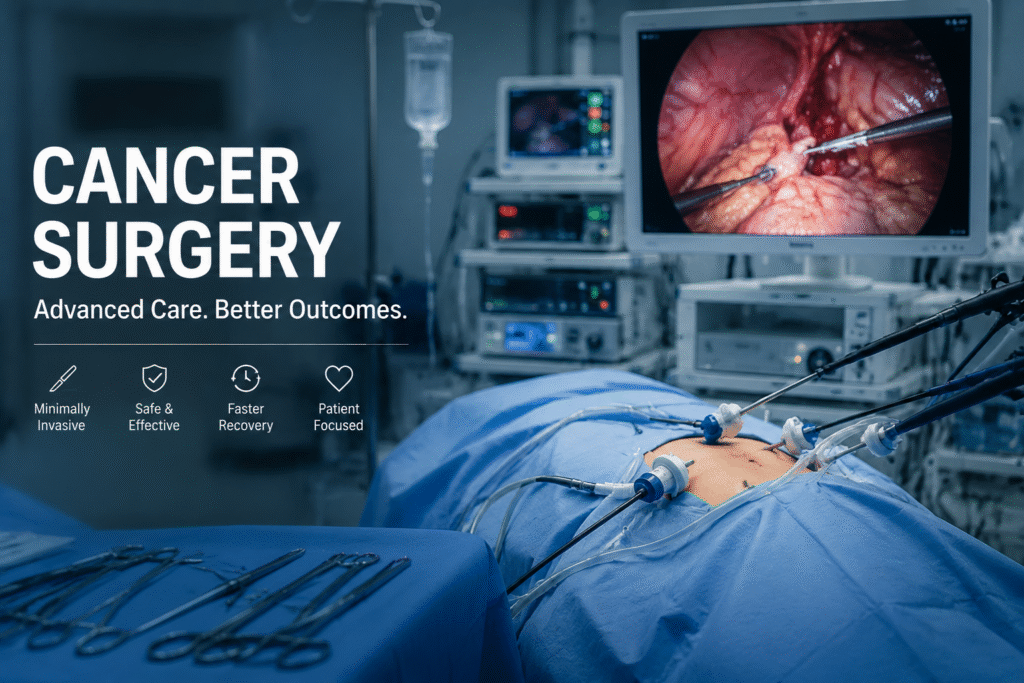
Hearing the word “cancer” from a doctor changes something in a person almost instantly. One moment you’re living your normal life, and the next you’re trying to process a word that feels too big to hold. Once the initial shock starts to settle, the question that comes up again and again is simple: what happens now? For a lot of patients across Pakistan, part of that answer is cancer surgery in Islamabad. And honestly, once you understand what that actually involves, it stops feeling like this huge unknown and starts feeling like something you can actually plan around.
This guide walks through the real process. How surgeons decide whether you’re even a candidate. What the different procedures actually look like. What recovery feels like once you’re home. And the questions you should be asking before you commit to anything.
What Cancer Surgery in Islamabad Actually Involves
Surgical oncology isn’t really “one procedure.” It’s a whole category of treatment, shaped by where the tumor sits, how far it’s progressed, and what your body can realistically handle. Cancer surgery in Islamabad has changed a lot over the past couple of decades, and most of that change comes down to one thing: a much heavier reliance on minimally invasive and laparoscopic techniques instead of the long, open surgeries that used to be the default.
In my experience talking with patients, both before surgery and well after they’ve recovered, the fear rarely comes from the surgery itself. It comes from not knowing what’s about to happen. So let’s actually break it down.
Why Minimally Invasive Techniques Matter
Laparoscopic surgery works through small incisions and a camera instead of one large cut, and the difference shows up in recovery almost immediately. Patients tend to see:
- Less blood loss during the procedure
- Shorter hospital stays, often just one to three days
- A faster return to normal daily activities
- Less scarring and less post-operative pain
That said, laparoscopic surgery isn’t automatically the right call for every patient or every tumor. Size, location, and how advanced things are all play into whether open surgery ends up being the safer, smarter route.
Pro Tip: If your surgeon recommends open surgery instead of a laparoscopic approach, try not to read that as bad news right away. Sometimes it’s genuinely the safer, more thorough option for your specific case. A good surgical oncologist in Islamabad won’t just default to whatever sounds more modern — they’ll actually explain why one approach makes more sense for you.
Common Procedures: From Colon Surgery to Hepatobiliary Care
Cancer surgery in Islamabad covers a fairly wide range of procedures, and which one applies to you depends almost entirely on where the cancer started.
Colon and Colorectal Cancer Surgery
This is one of the procedures performed most often, and wherever possible, surgeons take a bowel-sparing approach. The goal is straightforward: remove the tumor completely while still protecting long-term digestive function, instead of treating that as an afterthought.
Stomach and Esophageal Cancer Surgery
These cases get complicated fast, mostly because the stomach and esophagus sit so close to other vital structures. That’s why a multidisciplinary review, where several specialists actually weigh in before the surgical plan gets finalized, isn’t just a formality. It catches things one person working alone might easily miss.
Liver and Pancreatic Cancer Surgery
Liver cancer surgery in Islamabad and pancreatic cancer surgery in Islamabad both fall under hepatobiliary surgery, and it’s not an exaggeration to call this some of the most demanding work in oncology. These organs are packed with blood vessels, which means there’s very little room for error. If you or someone you love is facing this kind of diagnosis, ask the surgeon directly about their specific experience with hepatobiliary cases. That’s not a rude question. It’s a necessary one.
Tumor Removal and Biopsy Surgery
Sometimes surgery isn’t even about removing a confirmed cancer yet. It’s about finally getting a real answer. A cancer biopsy surgery provides the tissue sample doctors need for an accurate diagnosis before any treatment plan can move forward.
Are You a Candidate for Surgery?
Not every diagnosis leads straight into an operating room, and it helps to know that going in. A surgical oncologist in Islamabad typically starts considering surgery when:
- There’s a confirmed solid tumor at a stage where removing it surgically is realistic
- Surgical staging is needed to figure out how far the cancer has actually spread
- A tissue biopsy is required before any further treatment decisions can be made
- Surgery fits into a larger, multidisciplinary treatment plan
- The tumor is affecting organ function or quality of life in a noticeable way
- You simply want a second opinion before moving forward with something else
What Nobody Tells You: Asking for a second opinion doesn’t insult your first doctor, and it doesn’t waste anyone’s time. It’s a completely normal part of cancer care, pretty much everywhere in the world. And if a clinic ever pushes back on you wanting one, that reaction itself tells you something worth paying attention to.
What Recovery Actually Looks Like
Recovery timelines shift depending on the procedure, but there’s a general pattern that’s worth knowing so you’re not caught off guard.
Most patients spend one to three days in the hospital after a laparoscopic procedure. Open surgery or complex hepatobiliary cases usually mean longer. After that, the weeks ahead typically involve:
- Wound care and monitoring for any signs of infection
- Pain management that gets adjusted as healing progresses
- Coordination with your oncology team if chemotherapy or radiation comes next
- Regular follow-up scans to watch for any signs of recurrence
That’s a lot to keep track of on your own, right? It is. Which is exactly why having real continuity between your surgeon, your oncologist, and any radiation team matters just as much as the surgery itself.
Common Mistakes to Avoid
A handful of patterns keep showing up in patients who end up struggling more than they needed to.
Putting off the first consultation out of fear. Timing genuinely matters with cancer surgery, and delaying that initial appointment because of anxiety can cost weeks that mattered.
Not asking enough about a surgeon’s specific experience. A general surgeon and a dedicated cancer surgeon in Rawalpindi or Islamabad with real hepatobiliary or colorectal expertise are not the same thing, especially for complex cases.
Skipping pre-surgery preparation. Nutritional assessment and a proper medical evaluation before surgery aren’t just boxes to check. They genuinely affect how smoothly recovery goes.
Trying to carry the emotional weight alone. Cancer surgery takes a toll physically, but the emotional side is just as real, if not more so. Leaning on family, a support group, or a counselor isn’t a nice extra. It actually helps people get through treatment.
Choosing the Right Surgical Team
According to the World Health Organization, early detection paired with timely, quality treatment meaningfully improves survival outcomes across most cancer types. That’s really the whole reason choosing where, and with whom, you have surgery matters so much.
When you’re evaluating a center for cancer surgery in Islamabad, a few questions are worth asking outright:
- Does the team include a real multidisciplinary group of oncologists, radiologists, and nutritionists, or is it just a surgeon working alone?
- What anesthesia and post-operative monitoring protocols are actually in place?
- Is there an honest, transparent conversation about risks and realistic outcomes before you’re asked to consent to anything?
Frequently Asked Questions
Is cancer surgery safe?
When it’s performed by an experienced surgical oncologist following international safety protocols, cancer surgery carries risks fairly comparable to other major procedures. The actual risk depends on cancer type, stage, and your overall health.
Will I need treatment after surgery?
Often, yes. A lot of patients go on to need adjuvant chemotherapy or radiation. Your multidisciplinary team should walk you through this as part of the bigger treatment plan, not spring it on you afterward as a surprise.
How is liver or pancreatic cancer surgery different from other procedures?
Hepatobiliary surgery deals with organs that have dense blood supply and sit close to other vital structures, which is exactly why liver cancer surgery in Islamabad and pancreatic procedures demand more specialized surgical experience.
Can I get a second opinion before committing to surgery?
Yes, and it’s a completely normal part of responsible cancer care. A genuinely reputable cancer surgeon in Rawalpindi or Islamabad won’t discourage you from getting one.
How soon after diagnosis should surgery happen?
That depends entirely on the type and stage of cancer. Your surgical team should be able to explain the urgency clearly, based on your actual diagnostic findings, not some generic rule of thumb.
Final Thoughts
A cancer diagnosis takes your sense of control away almost the moment you hear it. Surgery, in a real sense, is how patients start taking some of that control back. The path through cancer surgery in Islamabad looks different for everyone who walks it, but a few things stay constant no matter what: a clear diagnosis, an honest conversation about your options, a surgical team that actually knows what they’re doing, and a recovery plan that doesn’t just stop the day you walk out of the hospital.
If you’re facing this decision right now, the questions you ask beforehand matter just as much as the surgery itself. So ask all of them. Don’t hold back.
If this guide helped make things a little clearer, pass it along to someone who might need it too, or reach out directly to book a consultation and talk through your specific case.