
Expert Piles Surgery in Islamabad with Personal Care and Complete Support
Piles make normal days painful. Sitting and standing can hurt a lot. Many people feel shy about this problem. You do not need to feel shy. Help is here, and it is simple to ask. In Urdu, piles are known as bavaseer. Dr Ahmad Raza, a piles specialist doctor in islamabad, tells you what you need to know in simple words. On this page, you learn what piles are. You learn how treatment options work. You learn what surgery day is like. You learn what to expect after surgery. All hard words are explained simply. Diet changes and creams help some people. But at times surgery is the only option. Bleeding piles need timely care. Do not wait in shame. Dr Ahmad Raza guides you at each step. He explains the care in simple words. Ask your questions freely today.
Understanding the Piles Treatment Journey
For piles surgery in Islamabad, care starts with one check, showing your type and how bad it is.
Piles are swollen veins near the bottom, like small soft cushions filled with blood. Usual signs are bright red blood on tissue paper, itching, soreness, and a soft lump outside. But blood does not always mean piles. Blood with weight loss, a lasting change in toilet habits, or dark blood needs a quick check. These signs can point to something else inside the bowel. A quick check tells you what it is.
Pakistan has many strategies for hemorrhoid treatment in Pakistan. These include modifying diet and the recent medical advancements.
What Makes Our Piles Surgery Different?
The difference starts with the first visit. Here you are listened to and told the truth about your condition.
Many people feel nervous at the first visit. So first, we listen.
The piles surgery procedures in Islamabad here are traditional surgery, laser surgery, and stapled surgery.
All new methods use small cuts, not big ones. They are minimally-invasive, so pain is often less and healing is simpler.
Dr. Ahmad Raza practices as a hemorrhoid specialist in Pakistan and treats piles, small tears called fissures, and small tunnels called fistulas every day.
Laser Piles Surgery
Stapled Hemorrhoidectomy
Conventional Hemorrhoidectomy
Anal Fissure Surgery
Fistula Treatment
Our experienced hemorrhoid specialist in Pakistan will determine the most appropriate procedure based on your hemorrhoid grade, symptoms, and overall health.
Am I a Candidate for Piles Surgery?
You are a candidate when piles keep bleeding or causing pain despite simple treatment.
Surgery is an option when:
- Bleeding does not stop despite trying various treatments
- Pain is not relieved despite change in food and creams
- Piles are outside
- It makes sitting and working hard
- It causes a visible lump
Take this list as a guide only. Piles surgery eligibility in Pakistan is never fixed by a list on a website, but by a check, your health, and your own wishes.
Surgery does not suit everyone. Small, new piles often get better with creams, food changes, and more water. In pregnancy, waiting is often wiser, unless heavy bleeding or severe pain needs quicker care. If waiting is better for you, the doctor will say so plainly.
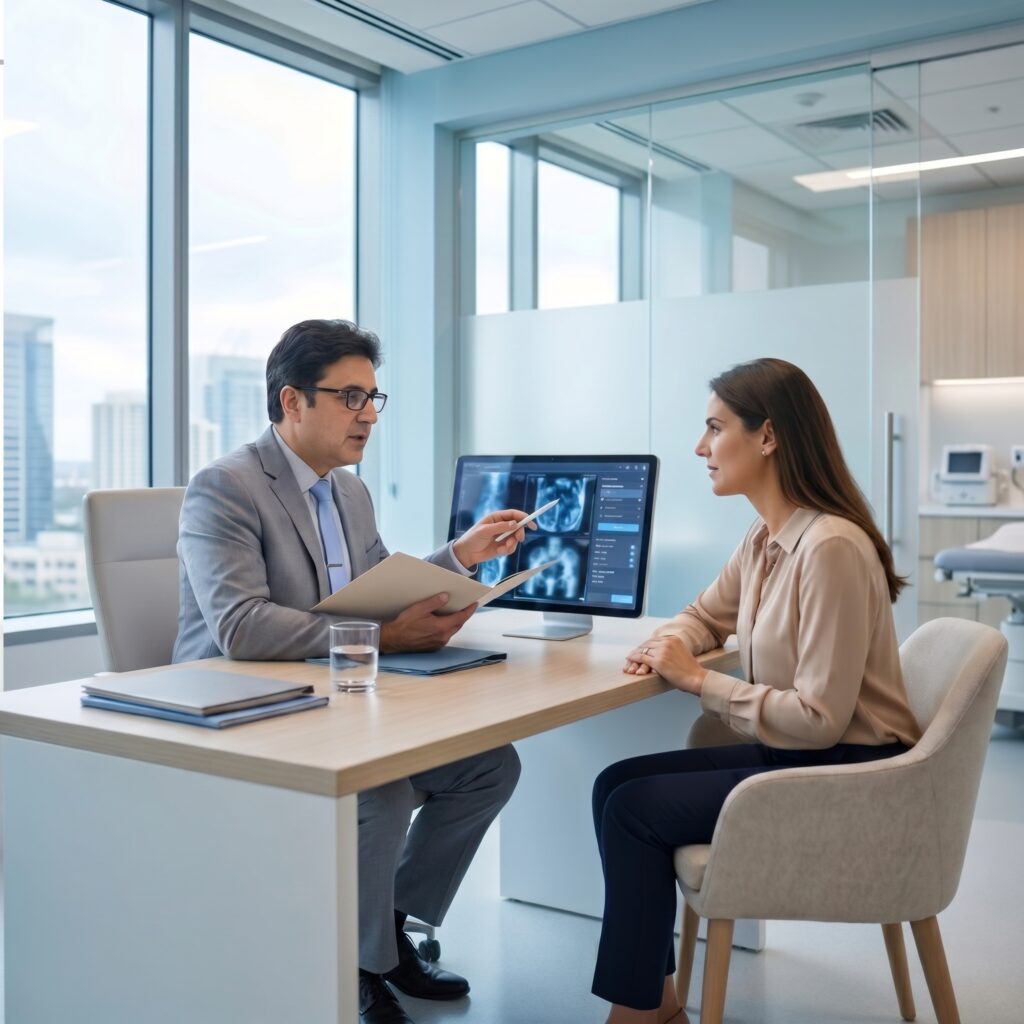
Your Journey at Our Piles Clinic
Your care follows four clear steps at our piles clinic in Islamabad.
Patients from both cities, Rawalpindi and Islamabad, come here for Piles treatment in Islamabad.
Initial Consultation
The first visit is private and relaxed. The doctor listens to your issues, checks your concerns, and explains the fitting method and its cost in writing. Visits take place at Medicsi, Bahria Town Phase 4, Rawalpindi, and at Eastridge Hospital, Peshawar Road, DHA-1, Rawalpindi.
Pre-Surgery Preparation
Before surgery, tests check your health. You also get a food plan, and guidance on what to eat, what to avoid, what medicines to take, and what medicines to stop.
The Surgical Procedure
On surgery day you are taken to the hospital. The anesthesia medicine puts you to sleep. The doctor makes small incisions and removes the piles. After that, you rest until the effect of the medicine wears off. Then you go home with aftercare instructions.
Recovery and Follow-Up
After surgery, eat simple, fibrous food. Fibre, the rough part of plant foods, keeps stools soft. Lift nothing heavy.
Call at once if there is bleeding, pain, or fever.

Real Results, Real Lives Changed
A real result is comfort back: sitting, walking, and working without planning your day around pain.
Questions about the Hemorrhoid treatment success rate in Pakistan deserve an honest answer. No page can give one number for all people. Results depend on piles, method, and aftercare.
Can permanent piles treatment in Islamabad really happen? Surgery takes away the piles you have now, and for most people that relief lasts. But new piles can come later, when hard stools and pushing return. So habits and follow-up matter. No operation can promise that piles will never come back.
Piles surgery before and after is best judged the same way: by daily life feeling easy again, not by photos.
Understanding the Procedure
Cost is often the first worry. There is no fixed price for piles surgery.
For most people, the cost of piles surgery in Islamabad is a major concern. Your cost is confirmed in writing after a check.
Many ask the same in Urdu: bavaseer ka operation cost. You get it in writing after consultation, nothing hidden.
The Piles surgery cost in Islamabad has no one fixed figure.
The Laser piles surgery cost in Islamabad depends on your case and facilities.
The Stapled hemorrhoidectomy cost changes with case and hospital.
The Anal fissure surgery cost Islamabad is confirmed after consultation.
The fistula treatment cost Pakistan depends on the tunnel’s depth and complexity.
Ask about affordable piles surgery in Islamabad options. Our clinic gives prices in writing before surgery.

Why Our Center?
People pick this clinic for privacy, honest advice, and follow-up care. Families from both Islamabad and Rawalpindi choose it.
Our piles surgery centre in Islamabad is built on personal care and privacy.
Expert Surgeons
Dr Ahmad Raza checks you himself. He explains things plainly, gives costs in writing before surgery, and follows you up afterwards.
Advanced Technology
Our clinic uses tools, like laser equipment, where they help. But judgement leads every decision. The check decides which tool fits you.
Comprehensive Care
Care is extended before and after the procedure. This includes preoperative and postoperative dietary advice, counseling, and follow-up visits.
Safety First
The operation is offered only after a thorough evaluation to determine if the potential benefits outweigh the known risks. The possible risks are explained prior to the procedure.
Addressing Common Concerns
Is surgery painful?
No, not during the operation. Anaesthesia, the sleep medicine, keeps you at ease throughout. After it, some soreness is normal, eased with medicines.
Will the condition come back after surgery?
Yes, at times. Surgery clears the piles you have now, but new ones can form if hard stools and pushing stay. Good habits and follow-up help.
Do I need surgery for small piles?
Small piles usually don’t need surgery. Creams, certain food changes, and more water and less pushing can help small piles. Surgery is usually done for large piles, small piles that don’t stop bleeding, and piles that have slipped out of the anus.
How do I choose the best piles doctor in Islamabad?
The best piles doctor in Islamabad for you checks you first, explains plainly, gives costs in writing, and follows you up afterwards.
As a piles doctor in Islamabad, he checks you himself.