
Advanced Cancer Surgery in Islamabad with Expert Care and Personal Support
A cancer diagnosis changes everything overnight. Despite the fear and urgency of finding the right treatment, you do not have to face this alone. Modern surgical oncology makes it possible to treat even complex cases with precision, safety, and genuine compassion. On this page, Dr Ahmad Raza explains cancer surgery in Islamabad in simple words. You will learn what surgery can do. You will learn what it cannot do. Honest answers help you decide well. Your family can read along with you. Bring your reports to the first visit. Bring your questions too. Dr Ahmad Raza guides you at each step. He explains the care in simple words. Read the full page before you decide. Ask your questions with confidence. Take your time deciding. You are not alone in this. Hope starts with clear answers. Clear answers bring real calm.
Understanding Your Cancer Surgery Journey
cancer surgery means an operation that takes cancer out of the body, plus a small rim of healthy flesh around it, just to be safe.
Cancer means some cells grow the wrong way and do not stop, like weeds that keep growing in a garden.
Sometimes, surgery alone is enough. Sometimes, medicines or radiation follow it. Radiation uses strong rays to kill cancer cells.
What Makes Oncology Surgery Different?
Surgical oncology in Islamabad is surgery that deals only with cancer, and that one focus makes it different.
A general surgeon treats many problems, from hernias to gallbladders. An oncology surgeon works on cancer every single day. That matters, because cancer care asks extra questions: has the disease spread past what scans show, which nearby parts must be kept safe, and how will the body work after the operation?
A surgical oncologist in Islamabad looks at your scans and reports first, and plans each step around you.
Colon and Colorectal Cancer Surgery
Stomach and Esophageal Cancer Surgery
Liver and Pancreatic Cancer Surgery
Tumour Removal and Biopsy Surgery
Our experienced oncology surgeon will help you determine which procedure aligns best with your cancer type, tumour location, stage, and overall health.
Am I a Candidate for Cancer Surgery?
You may be a good fit when an operation can take the cancer out and leave you stronger.
Cancer surgery eligibility in Pakistan is decided by careful medical judgement, not by age alone or by one single test. The team looks at:
- the type of cancer
- how far it has spread
- your heart, lungs, and overall strength
- whether surgery can truly help you
Surgery does not suit everyone. When disease has spread too far, surgery cannot take it all out. When the body is too weak, the operation can do more harm than good. In those cases, the team will say so plainly and talk about other care.

Your Journey at Our Oncology Surgery Centre
Your care follows four clear steps: consultation, preparation, surgery, and recovery with follow-up.
The cancer surgery procedure steps are explained in simple words at your first visit.
Our oncology surgery centre in Islamabad plans each step with you, for families from the twin cities, Islamabad and Rawalpindi.
Initial Consultation
Bring your reports, scans, and worries. The doctor listens first. A family member may sit with you. Consultations take place at Medicsi, Bahria Town Phase 4, Rawalpindi, and at Eastridge Hospital, Peshawar Road, DHA-1, Rawalpindi.
Pre-Surgery Preparation
Preparation means the tests and checks that make surgery safer.
Blood tests show how strong your body is, and scans show where the cancer sits. Your medicines and food are reviewed too. If a medicine thins the blood, the team may pause it.
The Surgical Procedure
On the day, you sleep while the surgeon takes the cancer out. Where possible, small cuts are used, and your family gets clear updates. Your family waits nearby during surgery. The team shares updates with them. You wake up in the recovery room.
The Surgical Procedure
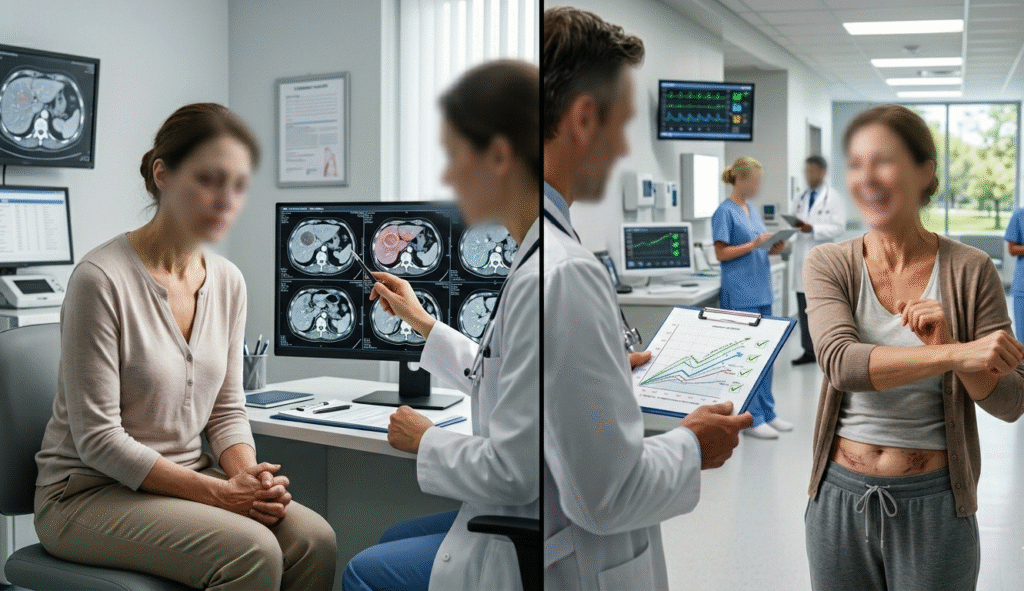
Healing is a slow return to normal life. Your team checks your wounds. Cancer surgery before and after is judged by normal life coming back. There is no single cancer surgery success rate in Pakistan for every person. Never skip follow up visits.
Understanding the Investment
Cancer surgery cost in Islamabad has no single figure, because no two cases are the same.
Your exact cost is worked out after scans and consultation, and shared in writing before surgery. It covers the operation, hospital stay, and tests around it.
If paying all at once is hard, ask early about cancer surgery financing and clear payment plans. Money should never stand between you and care.
Cancer Surgery Costs with Dr Ahmad Raza in Islamabad
Cancer surgery cost in Islamabad is not one fixed figure. It changes with the type of cancer, the complexity of the surgery, the hospital facilities, and whether more procedures are needed. You get the full cost in writing after your first evaluation, before any surgery. Colon and colorectal cancer surgery cost changes with the approach, whether it is laparoscopic or open surgery. Stomach and esophageal cancer surgery cost depends on how much tissue must be taken out. Tumour removal and biopsy surgery is assessed on its own after a full imaging review. We understand that cancer surgery financing is an important consideration. Our centre gives you clear cost information upfront, so you can decide with peace of mind.

Why Choose Our Center?
Choose a clinic you can trust: clear explanations, one surgeon throughout, honest answers about risks, and written costs.
Expert Surgeons
The cancer surgeon in Islamabad you meet on your first visit is the one who performs your surgery, and stays with you through follow-up. One surgeon guides you from first visit to last follow-up, and every choice is explained in plain words.
Advanced Technology
Clear scans show where the cancer sits, and fine tools help the surgeon protect healthy parts.
Comprehensive Care
Cancer care is more than one operation. It includes comfort, food guidance, and family support, for families from Islamabad and Rawalpindi.
Safety First
Safety is checked before, during, and after surgery. Risks are explained in full beforehand. At our cancer surgery centre in Islamabad, every stage has a safety check.
Addressing Common Concerns
Is cancer surgery painful?
Pain after surgery is controlled with medicines. Your team checks on you every day. Tell them how you really feel.
Can cancer come back after surgery?
Yes, it can. That is why follow-up visits matter. Regular checks catch a change early.
How do doctors describe blood cancer?
Doctors use blood cancer stages to show how far the disease has spread. Stages depend on the cancer type and test results. Your doctor explains your stage after your checks.
Will I need more treatment after surgery?
Some people do, and some do not. Your reports and biopsy result decide it. The biopsy result often decides this, because it shows what kind of cancer it is and whether more treatment should follow.